
Architecture
How the controller, control planes, isolation, and sync engine fit together.
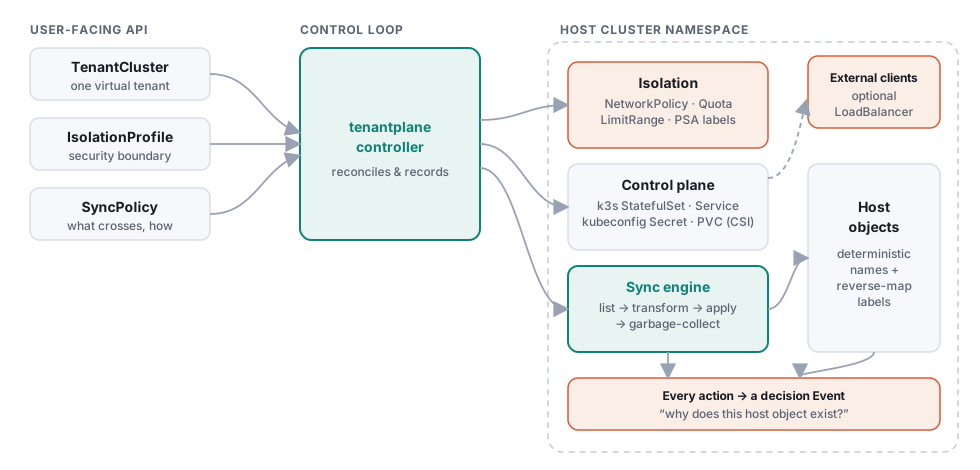
tenantplane separates the user-facing tenant API from the host-cluster implementation details. Everything is driven by three custom resources reconciled by a single controller running on the host cluster.
Components
The controller
A controller-runtime manager watches TenantCluster resources (and re-reconciles
when a referenced IsolationProfile or SyncPolicy changes). For each
TenantCluster it drives the whole lifecycle: isolation, control plane, kubeconfig
extraction, and sync.
Tenant control plane
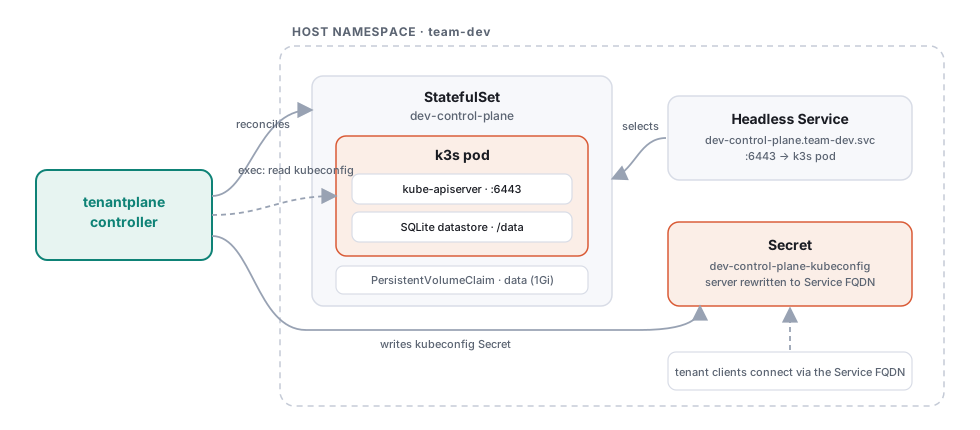
Each tenant gets a small k3s control plane running as a
single-replica StatefulSet in a host namespace, fronted by a headless Service.
The controller runs k3s with the agent and bundled add-ons disabled so the pod
is purely an API server + datastore. The datastore is SQLite for the current
milestone. The control-plane volume honors spec.controlPlane.storage
(StorageClass + size), so the same spec works against the EBS, Azure Disk, and
Persistent Disk CSI drivers; spec.controlPlane.expose.loadBalancer optionally
publishes the tenant API through a cloud load balancer, with the provisioned
address reported as status.externalEndpoint.
Isolation
The referenced IsolationProfile is compiled into concrete host objects — a default-deny NetworkPolicy, a ResourceQuota, a LimitRange, and Pod Security Admission labels on the namespace. tenantplane’s own control-plane pods carry an exemption label so the default-deny policy never cuts them off.
Sync engine
Once the control plane is Ready, the controller connects to it with the extracted
kubeconfig and runs the sync engine. For each
resource kind the SyncPolicy marks toHost, the engine lists tenant objects,
maps each to a deterministic host object, applies it, and garbage-collects host
objects whose tenant source is gone.
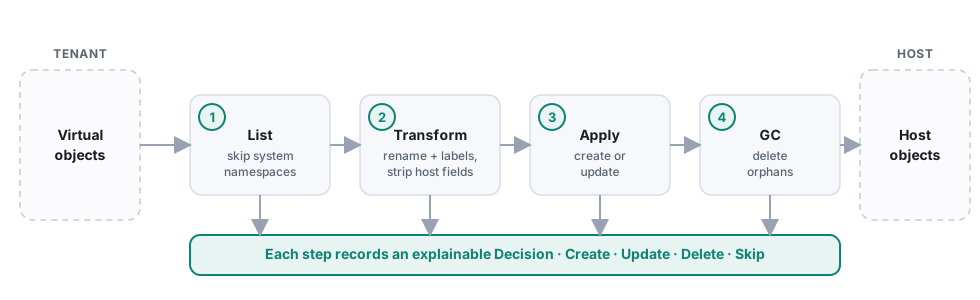
The sync convergence pass
Once the control plane is Ready, each toHost resource kind runs the same four
deterministic steps, recording a decision at every step:
Determinism and reverse mapping
Every host object tenantplane creates is named from <resource>-x-<virtual namespace>-x-<tenant> (hashed when that would exceed a DNS label) and carries
reverse-mapping labels and annotations. That means:
- the same tenant object always maps to the same host object, and
- any host object can be traced back to the tenant object that caused it.
This is what makes explain-sync able to predict
placement before anything is applied.
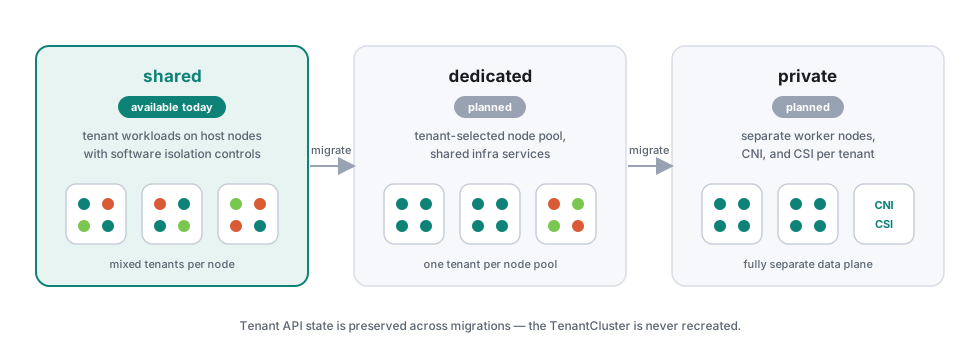
Isolation modes
| Mode | Workloads run on | Status |
|---|---|---|
shared | Host nodes with software isolation controls | Implemented |
dedicated | A selected node pool, shared infra services | Planned |
private | Separate worker nodes, CNI, and CSI | Planned |
The design goal is migration from shared → dedicated → private without recreating the tenant API state.
Found a gap? Open an issue or PR.